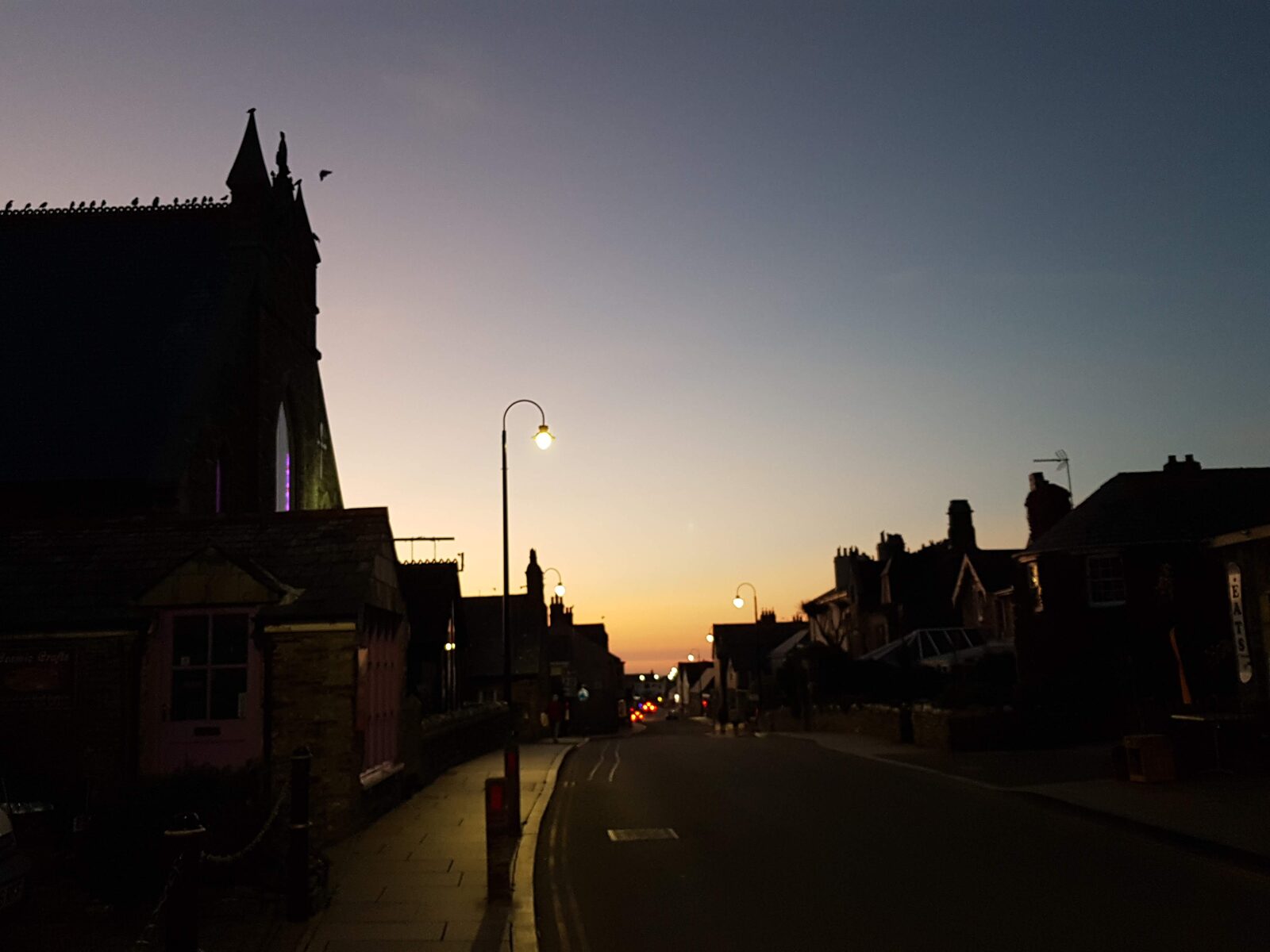
The Stone Speaks.
Thousands of weights have pressed into stone.
Force, carried for a moment, then released into the centuries.
Stone has borne the heat of bodies, the scrape of cloth,
the faint wetness that left nothing but mineral traces
caught in the shallow seams carved by time.
He remained longer than most. Five moonrises his heat met my cold.
His fever sank into the hollows weather has worn in stone.
His form slackened, settling closer, heavier,
as softened flesh yields to gravity and time.
Stone remembers patterns:
The shifting rhythm of a body failing,
the warmth draining by slow degrees.
Tremors altering their measure,
sliding outward and downward,
the way water seeps through earth after rain.
What left him did not vanish.
It dispersed into stillness,
as all things do.
The Neighbours’ Voices.
FIRST NEIGHBOUR
I saw him the first morning but thought nothing of it. Men often collapse after drink; the wall sees more drunks than the taverns do.
SECOND NEIGHBOUR
But he was bruised, you could see the colour on his arm even through the cloth. Purple as a plum - someone had struck him hard.
THIRD NEIGHBOUR
Hard enough to kill?
FIRST NEIGHBOUR
Not then - he walked there on his own feet. But when I saw him the second day, his eyes were wrong - feverish. He was staring through the world, not at it.
SECOND NEIGHBOUR
I told my sister: do not go near him. Illness clings to the unwary.
THIRD NEIGHBOUR
Was he drunk?
FIRST NEIGHBOUR
No. This was not drink - this was something deeper.
Robert, in the First Night.
The stone is cold against my back. Colder than it should be. Colder than the air. It breathes beneath me. Up and down - slow and steady. Stronger than my own breath.
The pain in my ribs throbs. The place where the oak staff struck rises beneath my tunic, tender and swollen. My arm will not lift far. I test it, pain snaps through the joint, I curse and let it fall.
The street is quiet now. Lanterns dim. People gone. Only the church remains, watching me with that slit of light from its window. A single candle inside flickers.
I will rise soon - I only need a moment - only a breath. But the moment stretches - breath falters. The cold seeps through me, anchoring me in place. I close my eyes and rest.
IV. The Coroner before the Inquest
I’ve seen many bodies, too many some would say, but you usually know where you are with a body. They tell the truth: a knife dragged across the throat, a blade plunged into the belly, limbs splayed from a fall from height. But sometimes a body lies, although, I’ve found the living lie more than the dead ever could.
When I was called to the church wall, I expected the usual story: drink, collapse, misadventure. But the bruising told a different tale; heavy, purposeful blows had rained down on him.
Yet he had lived for days after those blows were struck. A man beaten to death dies quickly. A man left to the mercy of illness does not.
The Stone, Night Two.
Pressure shifted along my surface as he settled again.
A tremor moved through his back and into stone, faint and irregular.
Heat gathered in one narrow patch, then thinned.
His breath rasped, leaving brief moisture that cooled to nothing.
Footfalls passed at intervals.
Bodies curved their paths away from him,
their weight striking the ground in altered patterns.
Fever worked through him in slow pulses.
The usual vibrations passed through the ground:
hooves striking earth,
voices scattering against stone,
smoke settling in thin layers.
Among my centuries, this was a brief interval.
Another weight weakening.Another pattern shifting toward stillness.
The Child’s Voice.
I waved. He did not wave back. Mama said not to go near, because he might be sick. She pulled me close and hurried past. But I looked back. His eyes were half-open. Like he was seeing something behind the sky.
Robert, in the Second Night.
I dreamed of water. A river running under the street, dark and slow. I walked along its bank. The water glowed, lit by something beneath the surface, something moving. I leaned toward it. And pain pulled me back into waking.
The candle did not light the night; the night measured the candle, a small pulse inside a giant beast.
My breath caught. My back pulsed with cold. The fever rose again. A strong fever grips a man like a tide. It pulls at him. Then releases. Then pulls again.
The air tasted of ash, and I wondered if night itself had burned.
I pressed my palms to the ground. Tried to stand. My legs shook. The world spun.
The stone would not let me go. Or perhaps my body would not. Either way, I sank back into the place where I had begun.
The stone did not comfort me; it kept me.
The Neighbours’ Chorus.
SOMEONE
He is cursed.
ANOTHER
He is ill.
A THIRD
He is dying.
THE FIRST AGAIN
Should we fetch the doctor?
A FOURTH
Are you mad? If he carries plague, we will all join him at the church wall.
A FIFTH
I heard he was beaten.
A SIXTH
Beaten or not, he sleeps like a man claimed. Look at his eyes.
A SEVENTH
God rest him. He will not see another Sunday.
The Stone, Night Three.
Heat moved through him in shifting waves,
rising and receding against stone.
Pressure trembled, irregular and weakening.
Small sounds left his mouth,brief disturbances in the air, soon dispersed.
His breath struck stone in short, uneven bursts.
Moisture gathered, cooled, and vanished.At times his head touched stone,
a slight increase in weight, then release.
Each contact lighter than the last.
Stone registered the changes. Measure by measure.
Breath by breath. Heat lessening. Pressure fading.
He remained where he had settled.
Stone held the shape of him until the next shift came.
The Coroner, Walking the Street.
Something about the path he had taken troubled me. Between Wood Street and the church wall he could have sought help. He could have found a bed, but he chose a church wall - a threshold.
Men do not choose such places unless they are called. Or unless they have nowhere else to go. I wondered which it was for him. People feared what they thought clung to him, either illness or judgement. In this city, people confuse the two, and so they do nothing.
A Passing Midwife.
I saw him on the fourth day, his skin was grey under the bruises.
His lips cracked. He breathed as if trying to pull the whole world into his lungs and failing.
I hovered for a moment. My hands twitched toward him. Instinct is a strong thing, especially for those of us who guide life into the world. But guiding life out is another matter entirely.
I whispered a prayer. I kept walking.
Robert, in the Fourth Night.
The stone-cold and the fever-heat swim through me. Sensations overlap. My body has become its own landscape.
A man struck me. Oak against skin. The shape of the staff imprinted across my ribs. But that pain is distant now, fever drowns it.
Voices drift around me. Fading in and out. Women. Children. Someone singing down the street. Someone arguing in a doorway. Footsteps. A cart.
The world is both near and impossibly far.
The candle inside the church flickers again. I fix my eyes on it until tears prick. I am dissolving. Slowly. Softly. The night is erasing me piece by piece.
The Stone, Night Five.
The fifth cycle brought little weight.
What remained of him settled unevenly,
softer at the edges, slackening toward the ground.
Contact pressed into stone in faint, collapsing intervals.Heat had almost left him. What lingered was thin,
held in narrow patches that cooled quickly.Tremors came rarely, small vibrations against stone.
Breath reached me in shallow strokes of warmth,
each one shorter than the last.Weight departs in stages.
First from the limbs. Then the hands. Then the mouth.
The city moved as it always did: hoofbeats through the earth,
distant wheels, smoke falling in slow layers.
His breathing thinned. The final pause lengthened.
Then the warmth ended. After that, he was still.
The interval continued its usual measure.
The air held its temperature.
Nothing shifted.
The Neighbours Chorus at Dawn.
“Is he gone?”
“He is.”“God help his soul
“Five nights he stayed there. Five. I counted”
“The wall held him. Held all of him, like it meant to keep him.”
“I heard he was beaten. Did you know?”
“Yes. Wood Street. They said the staff was thick enough to fell a mule.”
“Then why say he died of illness?”
“Who can say what kills a man? Fever. Wind. Cold. Sin. A bad night. A worse choice.”
“Whatever took him, it was slow.”
“Slow and cruel.”
A Brief Gathering.
NEIGHBOURS: He is not moving.
CORONER: The bruises are extensive.
STONE: The breath’s pressure thinned.
NEIGHBOURS: Five nights, I told you.
CORONER: He lived after the blows; he lingered in the cold.
STONE: Heat leaves; cold remains.
NEIGHBOURS: Do we fetch help or prayers.
CORONER: We fetch the law.
STONE: Law carries no heat.
ALL: Hush.
The Coroner’s Verdict.
The bruises told one story, the body told another - the law asked me to choose. Witnesses said he lived five days after the beating. Five nights at the church wall. Five nights of exposure, fever, and decline. I recorded what I must. A clean verdict. A practical verdict. The only one that would pass uncontested. He died of the illness he contracted by lying out in the street.
But as I wrote it, I felt the chill of the church’s shadow. Some truths lie beneath the ink and some deaths are not so simple to name.
The Stone, After.
The city’s patterns continued.
Footsteps struck the ground. Voices rose and thinned.
Through all of it, stone held: grey, cold, unchanged.
Stone registered the absence where his weight had been,
the cooling that followed his last breath,
the diminishing pattern from the first cycle to the fifth.
These traces remain in stone as alterations in surface,
in mortar, in the fine recesses where dust gathers.People no longer rest long against this part of the wall.
Some note a colder surface.
Some pause at the way sound behaves here.
Some press close listening for movement.There is no movement. No breath.
Only the imprint of pressures once applied,
and the slow retention of what weather and bodies leave behind.
Stone keeps what passes through it.
And what it keeps does not depart.