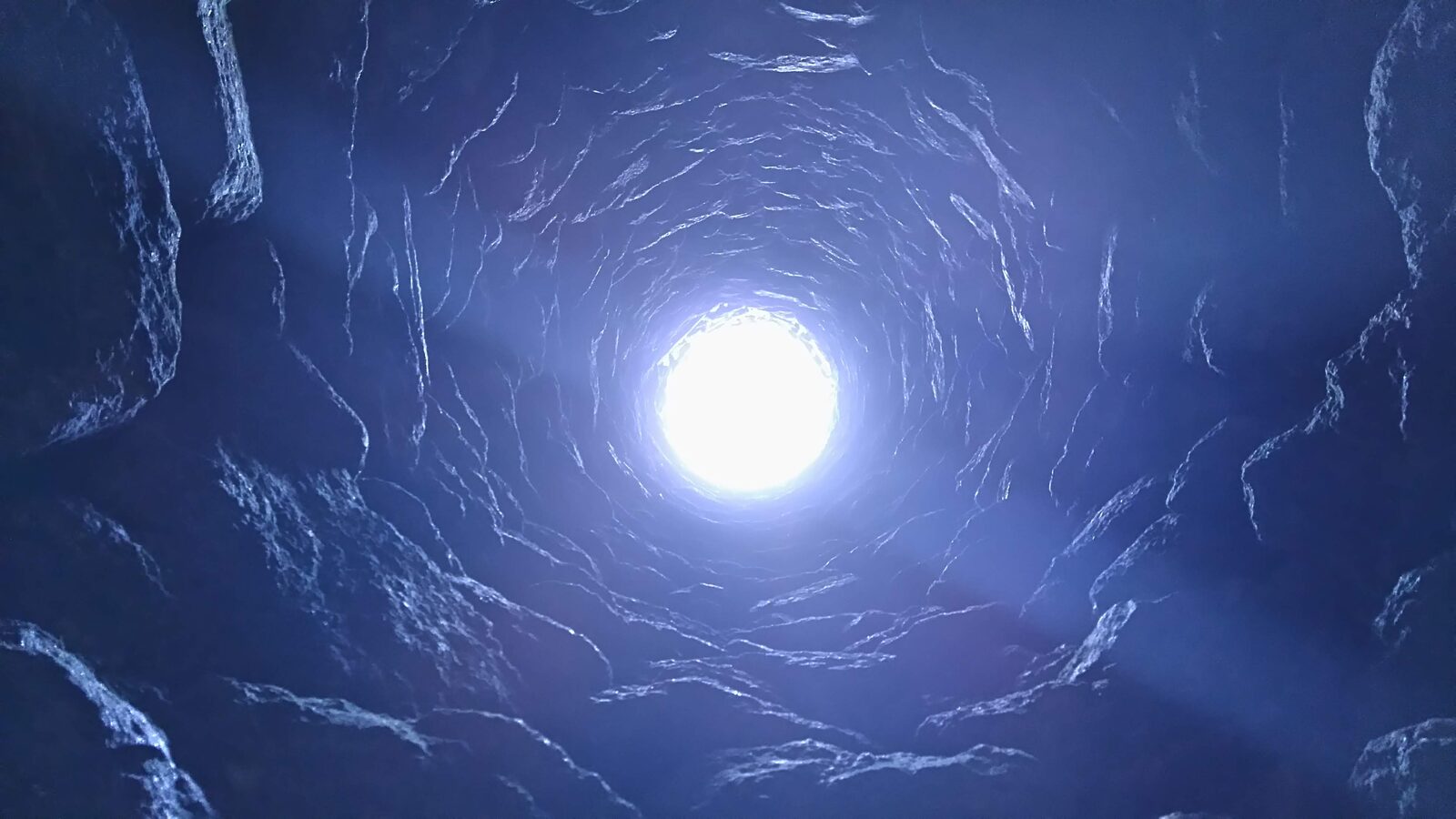
The Fogou is a man-made enigma. A mysterious dry stone-lined passageway tunnelled into the earth. Uniquely Cornish, they are truly Celtic, believed to date from between 500 BCE and 500 CE, and are often connected with the remains of iron-age settlements. Meaning cave in the Cornish language, there are eleven surviving fogous (pronounced foo -goos) in Cornwall, all west of Truro.
I am in the remote southwest of Britain, in the Penwith district, the toe end of Cornwall, as far west as you can go; on a mission to find two of Cornwall’s lesser-known Fogous.
Dominating this ancient landscape are russet topped hills, crowned by rocky outcrops. Below them a patchwork of fields boast ancient dry-stone walls - some of the oldest man-made structures in the world still in use.
These fogous sit in a remote windswept vista. Named ‘extreme end’ in Cornish, Penwith’s open moorland hosts few trees but the hardiest of hawthorns toughing it out, twisted and gnarled by the savage gales. An azure strip of Atlantic Ocean shimmers on the horizon as I near Pendeen. The landscape is littered with the detritus of a mining past, brick chimney stacks and the ruins of ivy draped engine houses.
To the south of the village, the abandoned industrial site of Geevor Mine scars the clifftop. The spectre of a tin and copper mining industry that survived from the bronze-age up until the 1990s. Now the old miner’s cottages are rented out to tourists. Local hospitality and agricultural workers live in caravans alongside plush seaside holiday homes.
I walk between imposing, head high, curved dry-stone walls, searching for my first fogou. Spires of foxglove seeds, and old dry teazel stems - with their spiky brush heads, poke from the earth below and a plethora of hairy lichens proliferate the granite stonework.
I spot an incongruous, raised round; this must be it. Passing through an unlocked gate I spot the large granite lintel framing the mouth of Lower Boscaswell fogou. Once known as Giant’s Holt, this scheduled monument sits within the remains of the great curved stone walls of an iron-age courtyard settlement.
The entrance, framed by granite lintels, faces the Atlantic Ocean. It once led to a stone-lined tunnel, which is now sadly blocked off. The construction has suffered much damage over the ages. First recorded in the 19th century, it is believed the main passage of the fogou was ten metres long, roofed with large granite slabs, leading to an oval enclosure.
The purpose of these monuments will probably remain forever unknown. Fiercely debated among archaeologists and historians, some theorise they were used for the storage of food, seeds or other valuables, or possibly for sheltering from invading forces. Others debate these uses as impractical. I tend to side with those who theorise they were places of spiritual significance; perhaps used for meditation, sacred sites for inducing altered states of consciousness. For rites, initiations and possibly for dying. What is clear to me is the significance of these sites, they beckon you down into the earth. A passage from light to dark, from overworld to underworld. Reminiscent of death and dying, passing through this life to the next.
When I visited the incredibly well-preserved fogou at Carn Euny (a well-visited iron-age village six miles southwest of Pendeen) I felt the same comforting, calming ambience as here. As I am alone, the remoteness and isolation of the Boscaswell fogou seems to deepen the quieting atmosphere.
I sit in the entrance, on the prone granite stone, eating the berries I’ve foraged along the way, whilst looking out to the choppy waters. (Coastal blackberries always taste the best, maybe it’s the salt.) I’m honoured to see a rare Cornish chough, with its distinctive orange beak, swoop past me.
I imagine the people who would have once sat here through the iron age, looking out at the same seascape. Living on what would have seemed like the edge of the world, facing the Atlantic swells.
Returning to the coast-path I follow it west to Pendeen Head. From the Cornish ‘Penn Dyn’ - meaning headland castle, it’s thought the remains of a prehistoric cliff-castle sit underneath what is now a lighthouse. Also known as cliff-forts, or cliff-sanctuaries, depending on your interpretation of the prehistoric world; cliff-castles are thought to be constructed from the second century BCE and used up until the sixth century CE. I can’t help but think these would have been sites of significance much earlier than this. Here at Pendeen, the prominence of the headland, and its commanding view, suggests this would have been a natural site of importance for the inhabitants of the peninsula for many millennia. On his website, Ancient Penwith, Palden Jenkins theorises the site’s significance goes back as far as the neolithic, given its alignments with Neolithic Tor enclosures and Quoits (known as Dolmens outside of Cornwall.)
To reach Pendeen Vau fogou I take a track behind Pendeen Farmhouse and follow it to a mucky farmyard. Scouting for the inhabitants to ask permission I ascertain no one is in so I decide to be cheeky and chance it. I cut around the farmyard, and curve around through verdant green fields to find the site. The cattle watch me, mirroring my confusion as I look around, puzzled as to where this ancient enigma might be. I search the fields, littered with dung and puffball mushrooms, I’m still none the wiser. About to give up I make for the farmyard and there it is, a large stone-built mound, topped with earth and grass. First, I find the tiny rectangular creep entrance peeking out from the bottom of the mound. (Creep entrances are often found in fogous and are connected to smaller passageways that head off from the main section.) I sneak around into the farmyard to find the other end of the main passageway, the larger entrance to the fogou, yawning out of the mound it tunnels through.
Still intact, Pendeen Vau fogou is thought to be part of a larger settlement that would have been linked with the cliff-castle at Pendeen Head. Perhaps the two sites were used in conjunction with one another, for ceremonial and ritual purposes.
Set in the slurry filled farmyard a larger granite lintel stone frames the entrance to the passageway. I peer into the dry-stone lined tunnel which slopes down approximately seven metres, then lie on my stomach to poke my head inside. The floor of the tunnel is littered with large stones and ferns droop from the stepped stone slabs that make up the ceiling. Skeletal remains of this year’s foxgloves adorn the entranceway. It smells damp, rich and earthy, with a strong pong of cow manure. I shuffle forward on my belly and get in as far as my waist before I lose my nerve. My research tells me previous fogou pilgrims have been able to enter and make their way, albeit stooped to the visible end of the long passage before it veers sharply to the West. Today the tunnel is full of mud and slurry, and only accessible on hands and knees, or prone. I’m not brave enough to crawl this on my own. In Cornovia: Ancient Sites of Cornwall and Scilly, Craig Weatherhill tells us the steep passageway descends seven metres, then bends to the left, where a tiny doorway is set into a semi-circular chamber which sits a few feet below the field level.
Pendeen Vau and Boscaswell are unique among fogous in that they are orientated to the setting, rather than the rising, midsummer sun. These alignments with the revered ascent and descent of the solstice sun, again reminds me of rituals about death and rebirth, that may have been enacted within these monuments.
Despite it being intact, I don’t feel the same atmosphere at Pendeen Vau that I did at Boscaswell. The ambience is almost unwelcoming. Possibly the mucky farmyard setting, or perhaps something ancient and sinister. It could explain my reluctance to enter.
Renowned local antiquarian, and neighbour to Pendeen Farm, William Borlase, discovered Pendeen Vau fogou in the 18th century. Borlase had a passion for stone monuments, in particular fogous, so I must wonder at the extraordinary good luck of finding one next to his own property, Pendeen Manor. Is it possible he had one built himself? Or maybe it was this find that sparked his interest in these mystifying structures. As with all fogous, this will remain a mystery.
After spending time with this man-made cave, I rejoin the coast path and wind back around to Pendeen village taking in the terrain, wondering what the ancient inhabitants’ relationship with this far-flung promontory would have been. I head back around the headland, past the seaman’s mission toward the lighthouse. I gaze over to Portheras Cove.
The headland the fogou sits upon juts out into the Atlantic Ocean; the large stone mound would have been prominent in the landscape, seen by those arriving by boat at the Cove in prehistoric times.
The magnificent sea views from the peninsula mark it as a significant site which feels like the world’s-end, surpassing the tourist trap of nearby Lands-End, which has succumbed to commercialisation and over-tourism. Looking out to sea, the white horses crash onto black rocks that glisten in the sun, tumbling like diamonds in the surf. From here the water looks calm but I can hear the breakers booming into the caves below, the pebbles dragging along the shore as the water retreats.
The Cornish peninsula was a major trading hub in the late bronze-age and into the iron-age. Known as Belerion (‘shining land’) by the Ancient Greeks, it was well positioned on the Atlantic trade routes, and abundant in tin deposits. A recent archaeological study has established that Cornish tin was widely traded across the continent and throughout the Mediterranean more than 3,000 years ago. This industry continued throughout the iron age – when Cornwall’s fogous are believed to have been constructed. Would the cliff-castle and fogous of Pendeen been visible to the traders approaching by sea as possible navigational beacons drawing them to this sacred land?
Within the context of this peninsula’s plethora of megalithic sites, and the wider context of Cornwall’s prehistory, the fogou is yet another mystery that hints at a land that was as rich in culture as it was in tin. For the megalith enthusiast, Penwith’s prehistoric monuments beckon. Enigmatic monoliths, stone circles, granite quoits and cairns are all set in one of Britain’s most dramatic and captivating landscapes; and for me, the hidden, mysterious fogous, the underground passageways that time forgot are the most suggestive of a rich lost culture.
References:
Straffon, C. 2004. Megalithic Mysteries of Cornwall. Penzance: Meyn Mamvro publications
Weatherhill, C. 2009. Cornovia – ancient Sites of Cornwall and Scilly. Wellington: Halsgrove
Jenkins, P. ca.2015. ‘The Backbone Alignments of Belerion’. Ancient Penwith [online]. Available at: https://www.ancientpenwith.org/backbone.html [Accessed: October 2024]
Jenkins, P. ca.2015. ‘Mystery of the Fogous’. Ancient Penwith [online]. Available at: https://www.ancientpenwith.org/fogous.html#:~:text=Fogous%20are%20all%20located%20in,survive%2C%20with%2025ish%20further%20possibles.&text=Iron%20age%20underground%20chambers%20and%20tunnels%2C%20unique%20to%20West%20Cornwall [Accessed: October 2024]
Addley, E. 2025. “Cornish tin was sold all over Europe 3,000 years ago, say archaeologists”: ‘British team says new study ’radically transforms’ understanding of bronze age trade networks’. The Guardian 7th May [online]. Available at: https://www.theguardian.com/science/2025/may/07/cornish-tin-was-sold-all-over-europe-3000-years-ago-say-archaeologists [accessed 10th May 2025]
Multiple Authors. 2006 – 2018. ‘Pendeen Vau’. Modern Antiquarian [online]. Available at: https://www.themodernantiquarian.com/site/240/pendeen-vau [Accessed March 2025]