Unable to tell his successful family he’s been made redundant, burnout-ridden Elio avoids spending Christmas with them by hiding in the cosy English village of Button-on-the-Wold. Seeking a decent night’s sleep and uninterrupted time to binge TV, his holiday takes a turn when he meets Humphrey and Rupert, and an intense mutual attraction sparks. But Humphrey is still grieving his late husband, and Rupert is torn between respecting that grief and embracing new love. This extract from my short story explores the tender, messy boundaries of grief, healing, and unexpected polyamorous romance. Fruitcake is a queer romantic comedy.
The following afternoon, Elio is the only one who gets off the train at Button-on-the-Wold. There’s no one to ask, so he picks a direction and starts walking.
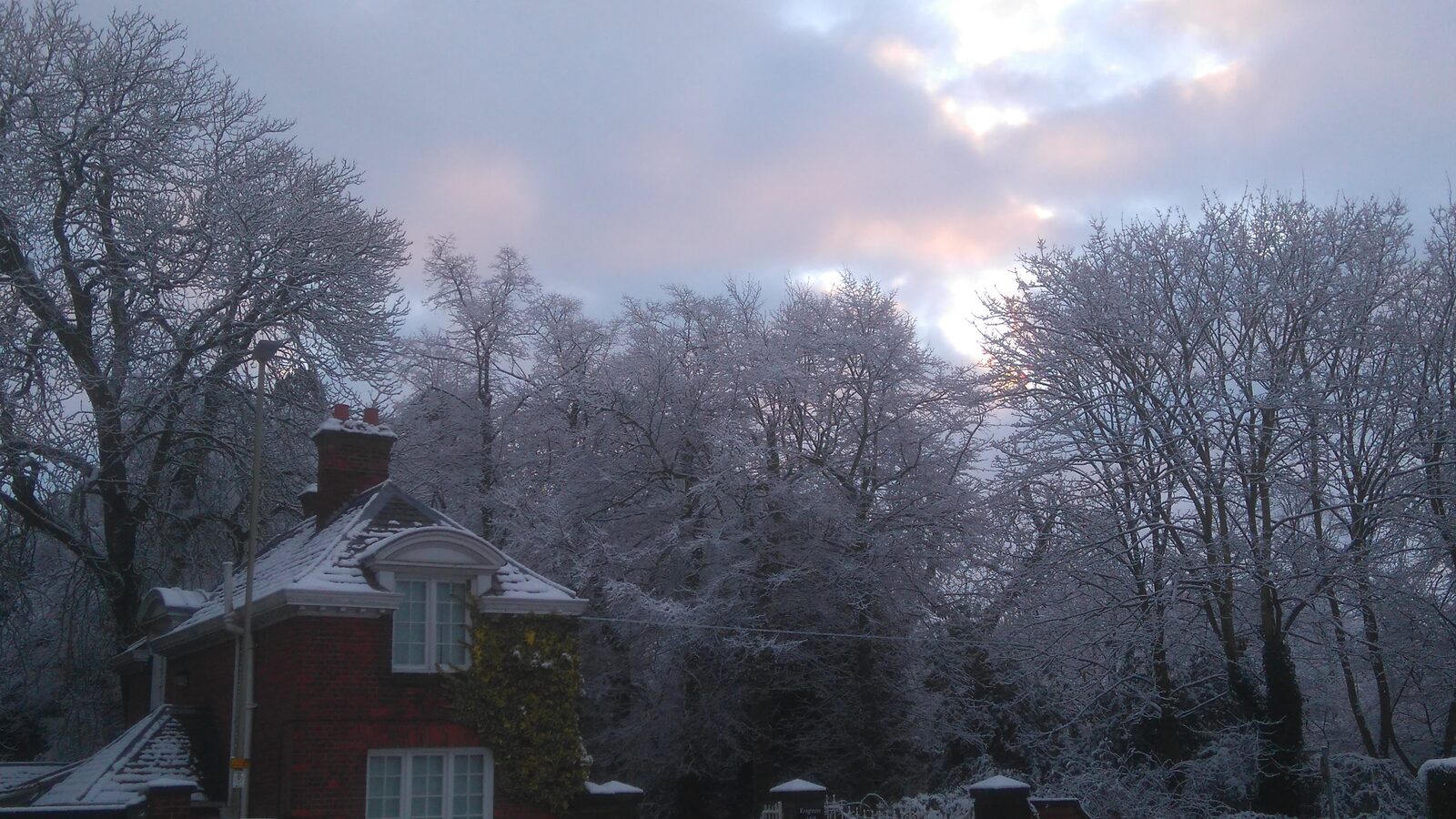
Last night, he’d booked the only available place to stay. Humphrey’s cottage sits by the village green, wisteria clouding its roof. Before Elio can knock, a dark-haired man ducks out through the blue front door.
He’s wearing corduroy trousers, Elio notices.
“Hey. You must be Elio.” The man smiles and offers a large hand. Elio shakes it gingerly. “I’m Humphrey. Welcome.”
“Thanks.”
Humphrey nods to the neighbouring cottage. “I’m just next door, if you need anything.”
“I’m sure everything’s fine.” Elio smiles wanly. “I’m a little tired. It was a long journey,” he adds, hoping Humphrey gets the hint.
He does.
Inside, Elio doesn’t bother unpacking. He roots through his belongings, leaving them scattered haphazardly across the floor, and musters up the energy to pull his pyjamas on and brush his teeth. Then he stumbles back into the bedroom and slumps inelegantly onto the bed.
Three days later, Elio wakes to a frantic knocking.
I’m late for work, he thinks, before remembering there is no more work.
The knocking stops. Elio blinks. Maybe he dreamt it. He rolls over and burrows into the blankets, eyes closing.
Five more minutes, he tells himself. Maybe ten. Then I’ll get up and— Never mind. The knocking starts up again. Groaning, Elio struggles to the window and yanks the curtain across. The winter sun is dazzling; it takes a moment for his eyes to adjust. There’s a flowerbox in the way, so he wrenches the window open, stretches up on his toes, and leans out.
There is a man on the path.
Tousled brown hair. Bundled into a navy coat and a woollen scarf. And wearing, inexplicably, a pair of brown shorts.
“Can I help you?” Elio asks, before he can stop himself.
The man looks around, then up, his face splitting into a wide grin. “Hello!” He jerks a thumb at his chest. “Rupert. Humphrey asked me to stop by. He hasn’t seen you since you arrived. Said he was getting worried.”
Humphrey should mind his own business, Elio thinks. That’s just his luck: pick a village on a whim, end up surrounded by busybodies.
Although.
Elio’s eyes drift downward. Though it’s ridiculous to wear shorts in December, Rupert’s legs do look good in them. He must play a sport of some kind – rugby, perhaps. His thick thighs are tanned, and Elio can see the muscles shift beneath his skin as he rests on one leg, then the other.
Rupert raises an eyebrow. “You good?”
Elio’s eyes dart up, his cheeks warming. He clears his throat. “It’s very early,” he says stiffly.
“It’s one-fifteen.”
Elio’s cheeks burn hotter, then hotter still. “You can tell Humphrey that I’m perfectly fine.” He grips the window, digging his fingers into the cold wood. He’s going to slam it. He’ll think of something clever to say, then he’ll slam the window shut. “And that-” he adds, faltering at Rupert’s widening grin, “-no further check-ups are required. By yourself or otherwise.”
Elio jerks the window down, cursing its stiffness, then throws himself onto the bed, heart hammering in his chest.
With any luck, that’ll be the last he sees of Rupert.
Or anyone else, for that matter.
Elio’s solitude is short-lived.
The following afternoon, Humphrey stops by, laden with groceries and a polished red tin. “Blueberry muffins,” he says, when Elio pries the lid off to peer suspiciously at the contents. “Mags-from-up-top sent them over.”
Elio doesn’t know who Mags-from-up-top is and doesn’t care to ask.
He’s not keen on visitors – he’d never invited anyone over to the flat, anyway – but it is Humphrey’s cottage after all, so he says nothing when, after tidying away the groceries and pouring the spoiled milk down the sink, Humphrey flicks the kettle on.
“Sit down, then,” he tells Elio.
Elio sits. It’s easier to do as he’s told. He watches Humphrey move about the kitchen with ease and tries to remember where the mugs are kept and which drawer has the spoons, but the details slip from his mind too quickly for comfort. After a while, Elio’s eyes catch on Humphrey’s wrists and settle there.
He’s pushed his sleeves up, the cuffs of a red shirt peeking out from beneath his woollen jumper. A smattering of fine dark hair. Long fingers. Nails neatly trimmed. A gold ring winks at Elio as it catches the light.
Elio looks down at the table.
Married.
That’s that, then.
“Sugar?” asks Humphrey.
Elio tries to focus on the grain in the wood. It’s too late to admit he’s more of a coffee drinker – the tea is already steeping – and Humphrey is only being kind.
“I don’t mind,” Elio says. “Everyone makes it differently.” He looks up and regrets it. Humphrey leans against the counter, the winter sun casting him in a beam of gold. His hair has taken on a reddish tint. “Really, there’s no need to fuss.”
Humphrey is quiet for a moment.
“You look like you need a bit of fussing,” he says, at last.
And Elio doesn’t know what to say to that.
It turns out Humphrey and Rupert come as a package deal.
Elio figures this out early on.
They appear on his doorstep each morning with one goal in mind – getting him out of the house.
Sometimes they’re successful.
Sometimes Elio shuts the door in their faces.
They like to walk through the village, flanking him like two cheerful bookends – Rupert in shorts with a knitted hat pulled low, Humphrey wrapped in his old charcoal coat, hands tucked deep in the pockets.
It snows overnight. Elio looks down at his Oxfords apprehensively, but Rupert produces a pair of boots in Elio’s size. “It’d be a crime to waste the first proper snow,” he insists, nudging Elio’s shoulder with his own as though they’d known each other years.
“We’re walking a bit further today,” Humphrey says quietly. “Are you sure you’re up for it?” He asks this in the same tone he uses for Have you eaten? Are you warm enough? Did you sleep well? It’s a tone that makes something tiny and aching unfurl inside Elio.
They head across the green. Rupert bounds ahead to point out anything remotely interesting – an uneven snowman, a lonely squirrel, their reflections in the frozen pond.
Elio laughs more in ten minutes than he has in weeks.
It occurs to him that they must like him, despite his bad manners, or else they wouldn’t keep inviting him out. They wouldn’t keep showing up with that easy insistence, that comfortable way of fitting him between them as though he’s meant to be there.
On the way back, Rupert suggests they stop for hot chocolate. Humphrey immediately hesitates.
“Elio might be tired,” he says softly.
“I’m fine,” Elio insists. “Really. I like this. Being out with you two.”
More and more, he finds he means it.
The next town over hosts a Christmas market. Elio mentions offhand that he’s never been to one, so Humphrey insists they go. Elio suspects it’s more to do with encouraging him to choose things for them to do, rather than any genuine interest in the market, but he doesn’t say anything.
The market is crowded, the air thick with smoke and cinnamon and pine. Elio trails a step behind Rupert and Humphrey, hands stuffed in his jacket pockets. Every so often, Rupert will turn to check he’s still there.
Elio blushes every time.
Humphrey pauses at a stall selling hand-crafted ornaments, so Rupert and Elio pause too. He tries not to stare at him but it’s hard. There’s the scratch of an unshaven beard darkening his jaw, and his hair has been windswept into a tangle. In each ear, small amber earrings glow like embers.
He’s married. The reminder comes harsh and unbidden. Elio looks away.
Rupert notices, of course.
He leans toward him, voice low. “You know his husband’s gone, right?”
“What?”
“He died a few years back. A car crash.” Rupert pauses. “He and Ned used to come here. This is the first time he’s been back since.”
“Oh,” Elio says, trying not to sound too interested.
“Yeah,” Rupert continues, a teasing lilt in his voice. “I wonder what made him want to come this year.”
Elio glances up at him, sees the corner of Rupert’s grin, and turns away, returning his attention to Humphrey.
Or who, he thinks. Or who made him want to come this year.
They watch a film on Friday night. Elio’s idea. Rupert and Humphrey drive to the next town over to pick up a pizza. Elio stocks up on wine and beer, then scrolls through Netflix until they get back.
It’s very domestic.
The three of them collapse onto the sofa. Or rather, Rupert sprawls, forcing Humphrey and Elio to fit around him. It’s a squeeze. Humphrey ends up at the far end, bracing one foot on the floor and wedging the other beneath Rupert’s hip. Elio tries for the middle and ends up in Humphrey’s lap.
Still, no one suggests moving next door to Humphrey’s.
They let Rupert choose the film. It’s terrible, of course. All car chases and big guns and explosions.
“Do you think it’s a cry for help?” Humphrey whispers.
Elio bites his lip, trying not to laugh.
They make it halfway through the film before he finishes his glass and carefully extricates himself with a murmured, “Refill?”
He pretends he doesn’t notice the brush of Rupert’s fingers against his ankle, or the way Humphrey’s hand catches his hip for the briefest second – steadying him.
All of it normal and not normal at all.
Elio slips into the tiny kitchen, heart thumping more loudly than warranted for a wine run. He grabs the bottle from the fridge. Takes a shaky breath. Tells himself he’s imagining the electricity humming through him. Imagining all of it.
When Elio pads back down the hallway, quiet voices drift from the living room. He hesitates, unsure if he should walk away or not.
“What are we doing, Humphrey?” asks Rupert. His voice is gentle, almost fond, but Elio can hear the undercurrent of frustration in it.
Humphrey sighs, a soft, helpless sound. “I don’t know about you,” he says, “but I’m just being a good host.”
His words cut through Elio. I thought we were friends. His cheeks warm. Could be friends. I thought— Elio had thought a lot of things.
Rupert huffs a disbelieving laugh. “A good host,” he repeats. “Humphrey, if being a good host means letting your guest sprawl in your lap after you buy him pizza, then I’ll book the next bloody slot.”
“Ru-”
Elio presses closer to the wall, closing his eyes.
“Just say what this is. Admit it, at least to yourself, that you feel something stronger than friendship. For Elio. For me.” Rupert’s voice lowers. “There’s nothing wrong with it. It’s not some moral failing.”
A clink of glass, and then, “I know there’s nothing wrong with it.”
“Well, then,” Rupert says, exasperated, “stop acting like you’re being disloyal. Ned will always be your husband. You’ll always love him. That doesn’t change because you want more than loneliness.”
Humphrey’s breath hitches. “Ru, please don’t-”
“I want him,” Rupert put it plainly. “I want you too. And I’m so bloody tired of all of us tiptoeing around it.”
The three of them are sick with it, feverish with wanting.
“I’m being a good host, Rupert. That’s all I’m trying to be.”
Elio feels the words like a door closing. He wants them – both of them – so desperately. But if this was all Humphrey would ever allow, if arm’s length is the closest he’d get… Elio swallows, trying to squash his hurt.
He straightens, smooths his expression, and steps into the living room with the wine bottle held like a white flag.
“Refills,” he says, as casually as he can manage, and pours himself a glass with a shaky hand.
Rupert’s stare is too knowing by half.
Arm’s length, Elio tells himself. Arm’s length.